The Room Sells Before the House Does: Why Staging Sells Luxury Homes Faster
Buyers decide how a home feels long before they decide what it's worth.
SELLER STRATEGY · DESIGN
Oct 22, 2026 · @Ashley
Buyers Feel a Home Before They Think About It
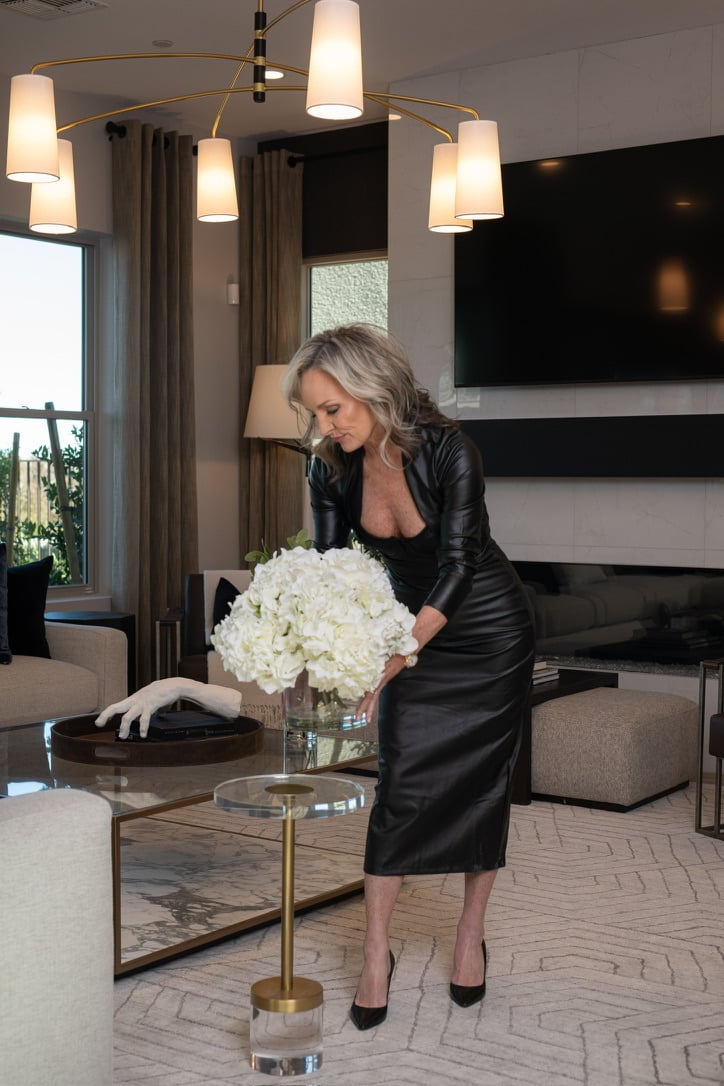
My background is in staging and interior design, and the thing that work taught me still holds true after over two decades in this market: a buyer decides how a home feels in the first few seconds. Everything after that is them looking for reasons to agree with the feeling.
That's why staging matters. Not because furniture sells houses... but because a well-staged room answers the questions a buyer hasn't asked yet. Where does the sofa go? How big is this room, really? Can I see myself here on a Sunday morning?
When those answers are obvious, buyers move. When they aren't, they hesitate. And in luxury real estate, hesitation is what turns into days on market.
WHAT THE DATA SAYS
The Numbers Behind What Designers Already Knew
I don't ask anyone to take staging on faith. The National Association of REALTORS® surveyed agents across the country for its 2025 Profile of Home Staging, and the findings line up with what I've seen in this market for years.
- Time on market. Nearly half (49%) of sellers' agents said staging reduced how long homes sat. 30% saw a slight decrease, and 19% saw a significant one.
- Offers. 29% of agents reported a 1% to 10% increase in the dollar value offered on staged homes.
- Visualization. 83% of buyers' agents said staging made it easier for buyers to picture the property as their future home.
- Getting through the door. 31% of buyers' agents said buyers were more willing to tour a staged home they'd already seen online.
I want to be honest about what those numbers are. They're agents reporting what they observed, not a guarantee for any one property. Staging doesn't fix a price that's wrong. What it does is remove the friction between a buyer's first impression and their decision to write an offer.
WHY IT MATTERS MORE AT THIS LEVEL
Luxury Homes Have More to Explain
A smaller home mostly explains itself. A luxury home rarely does. The features that set it apart are often the hardest to understand in an empty room or a quick scroll.
Scale. A great room with 30-foot ceilings can feel dramatic or cavernous, and the difference is usually furniture. Properly scaled pieces give the eye something to measure against, so a buyer reads the room as generous instead of hard to live in.
Purpose. Wine rooms, lofts, bonus rooms, a casita, a flex space off the garage... a buyer who can't tell what a room is for tends to discount it. Staging assigns each space a job, so it reads as value instead of square footage to figure out later.
Distance. Plenty of buyers in this market are relocating or buying a second home, and their first showing happens on a phone. NAR found that 73% of buyers' agents rated listing photos as highly important to their clients. A staged home photographs with depth and warmth. An empty one photographs as walls and floor.
Expectations. At this level, buyers are comparing your home to the best-presented properties they've seen, including on television. In the same NAR survey, 48% of agents said buyers expected homes to look like the staged homes on TV shows. A luxury listing that looks unfinished competes at a disadvantage before anyone walks in.
WHAT STAGING ACTUALLY IS
Editing, Not Decorating
This is where my design background shows up most. People hear "staging" and picture someone bringing in throw pillows. Done well, it's closer to editing. The goal isn't to make the home look like someone's taste. It's to make the architecture and the light the first things a buyer notices.
In practice, that usually means:
- Taking things out before bringing anything in. Most occupied homes need fewer pieces, not new ones.
- Scaling furniture to the room, so large spaces feel grounded and smaller ones don't feel crowded.
- Clearing sightlines to the views, the pool, the mountains or the Strip. If a buyer has to look around a bookcase to see the reason they'd pay a premium, the room is working against you.
- Letting in light. Window treatments open, lamps layered, nothing blocking the glass.
- Neutralizing the personal, so buyers see a home they could live in rather than a home someone else lives in.
It's also not a disguise. Staging should show a home honestly at its best, never hide a flaw a buyer has a right to know about.
VACANT OR LIVED-IN
Every Home Needs Something Different
Vacant homes have the most to gain. An empty luxury home shows its finishes, but it hides its scale and its purpose. Buyers walk through quickly because there's nothing to hold them in a room. Furnishing the main living areas, the primary suite and the outdoor spaces gives them a reason to stay, and a reason to come back.
Occupied homes usually need editing more than furniture. The work is curating what's already there, removing what pulls focus, and adding a few pieces where scale or flow needs help. It's often lighter, and it lets sellers keep living in the home comfortably while it's on the market.
Virtual staging has its place, especially for a quick visual on a vacant room. But it only works online. When a buyer walks in and the room in the photo isn't there, the gap between what they saw and what they're standing in costs you something. I'd rather the home live up to its pictures.
The timing matters too. Staging should be finished before photography and video, not after. The listing photos are the first showing, and for many buyers they're the one that decides whether there will be a second.
FREQUENTLY ASKED
Common Questions About Staging a Luxury Home in Las Vegas
Does staging really help a luxury home sell faster? In NAR's 2025 Profile of Home Staging, 49% of sellers' agents said staging reduced time on market. It isn't a guarantee, but it removes the hesitation that keeps buyers from acting on a good first impression.
Which rooms matter most to stage? Buyers' agents ranked the living room first (37%), then the primary bedroom (34%) and the kitchen (23%). In a luxury home, I'd add the outdoor living areas, especially when the views or the pool are part of the value.
Should I stage a home I'm still living in? Usually yes, but lightly. Most occupied homes need editing and a few well-scaled pieces more than a full install.
Is virtual staging enough? It can help online, especially for a vacant room, and it should always be clearly disclosed as virtual. Buyers still walk into the real room, so physical staging tends to carry a luxury home further.
When should staging happen? Before photography and video. The listing photos are a buyer's first showing.
Let's Connect
If you're thinking about selling and want a designer's eye on how your home will show, I'd love to walk through it with you.
Ashley McCormick (702) 523-0916 Lic# S.0047742 Global Real Estate Advisor · IS LUXURY · REALM Global @ashley.realestateadvisor · ashleymccormickhomes.com
Equal Housing Opportunity. Nevada License #S.0047742 | Verified by RealTrends | Top 1.5% Nationally. Statistics from the National Association of REALTORS® 2025 Profile of Home Staging reflect agent survey responses. Information deemed reliable but not guaranteed and subject to change.